Wool has been making carpets for thousands of years, and there is a good reason it has not been replaced. Carpet with wool still feels softer, recovers better, and ages more gracefully than almost any synthetic on the market. The catch is the price tag, and the slightly higher maintenance. This guide is here to help you decide whether the upgrade is worth it for your home, what to look for when you shop, and how to keep wool looking its best for the next 20 years.
Jump to a Section
- Why Carpet With Wool Still Beats Most Synthetics
- What Makes Wool Carpet Different From The Rest
- Carpet With Wool: Pure Wool vs Wool Blend
- Where Carpet With Wool Works Best (And Where It Doesn’t)
- How To Spot Quality Carpet With Wool
- How To Care For Carpet With Wool So It Lasts Decades
- Carpet With Wool FAQs
- Find Your Perfect Carpet With Wool at Flooring Factory Outlet
Why Carpet With Wool Still Beats Most Synthetics
The flooring industry has spent decades trying to copy wool. It has come close in some areas (stain resistance being the obvious one), but it has not actually replaced the real thing. Here is what wool does that synthetic fibres struggle to match:
- It bounces back. Walk across a wool carpet in socks, leave a footprint, and the pile springs back within minutes. Most polypropylene carpets hold an indent for far longer.
- It regulates temperature naturally. Wool keeps a room warmer in winter and cooler in summer, which sounds like marketing fluff until you live with it.
- It absorbs sound brilliantly. If you have ever walked into a wool-carpeted room and noticed it felt instantly quieter, that is the fibre doing its job.
- It hides dirt. Wool is naturally low-luster, so everyday dust and footprints show up far less than on shiny synthetic carpets.
The honest bit: wool is not indestructible. It costs more, it needs more careful cleaning, and a red-wine spill will ruin your evening if you do not act fast. But for the right household, the trade is worth it.
What Makes Wool Carpet Different From The Rest
The difference is in the fibre itself. Wool comes from sheep, which means every strand is a tiny natural coil with a slightly scaly outer layer. That structure does three useful jobs:
- It traps warmth. Each fibre holds a small pocket of air, which is why wool feels warmer than synthetic alternatives at the same pile depth.
- It resists soiling. The scaly surface stops dirt from sinking deep into the pile, so spills tend to sit on top long enough for you to blot them up.
- It absorbs humidity. Wool can hold up to a third of its weight in moisture without feeling damp, which helps regulate a room’s atmosphere.
None of that means wool is invincible. Drop a mug of coffee on a light wool carpet and you have got about ten minutes to act before it stains. But treat it with the same care you would give a good wool jumper, and it will outlast three or four synthetic replacements.
Carpet With Wool: Pure Wool vs Wool Blend
This is the question our showroom team gets asked more than any other: should I pay for pure wool or save money with a blend? Here is the honest breakdown.
Pure Wool (80% to 100% Wool)
Pure wool is the premium option. It feels the most natural underfoot, recovers from compression better than anything else, and generally carries the longest wear warranties. The downsides are real: it is the most expensive option, it can felt or shrink if it gets soaked, and it is more sensitive to harsh cleaning products.
Wool Blend (typically 80% wool, 20% synthetic)
Wool blends are the practical middle ground. The synthetic content (usually nylon or polypropylene) adds stain resistance and durability without losing most of wool’s natural benefits. For family homes, this is often the sweet spot.
50/50 Wool/Polypropylene
A 50/50 mix is the entry-level wool carpet. You still get the natural feel and bounce, with significantly better stain resistance and a friendlier price. It is a sensible choice for a first wool carpet if you are not sure you want to commit fully.
The best carpet for you might not be the most expensive. For a busy family lounge, a wool blend gives you most of wool’s benefits with a fraction of the worry. For a formal sitting room you use twice a week, pure wool is a genuine pleasure underfoot. It is about matching the carpet to the room, not chasing the highest wool content you can afford.
Where Carpet With Wool Works Best (And Where It Doesn’t)
Wool is not the right call for every room. Here is a quick guide.
Living Rooms and Bedrooms
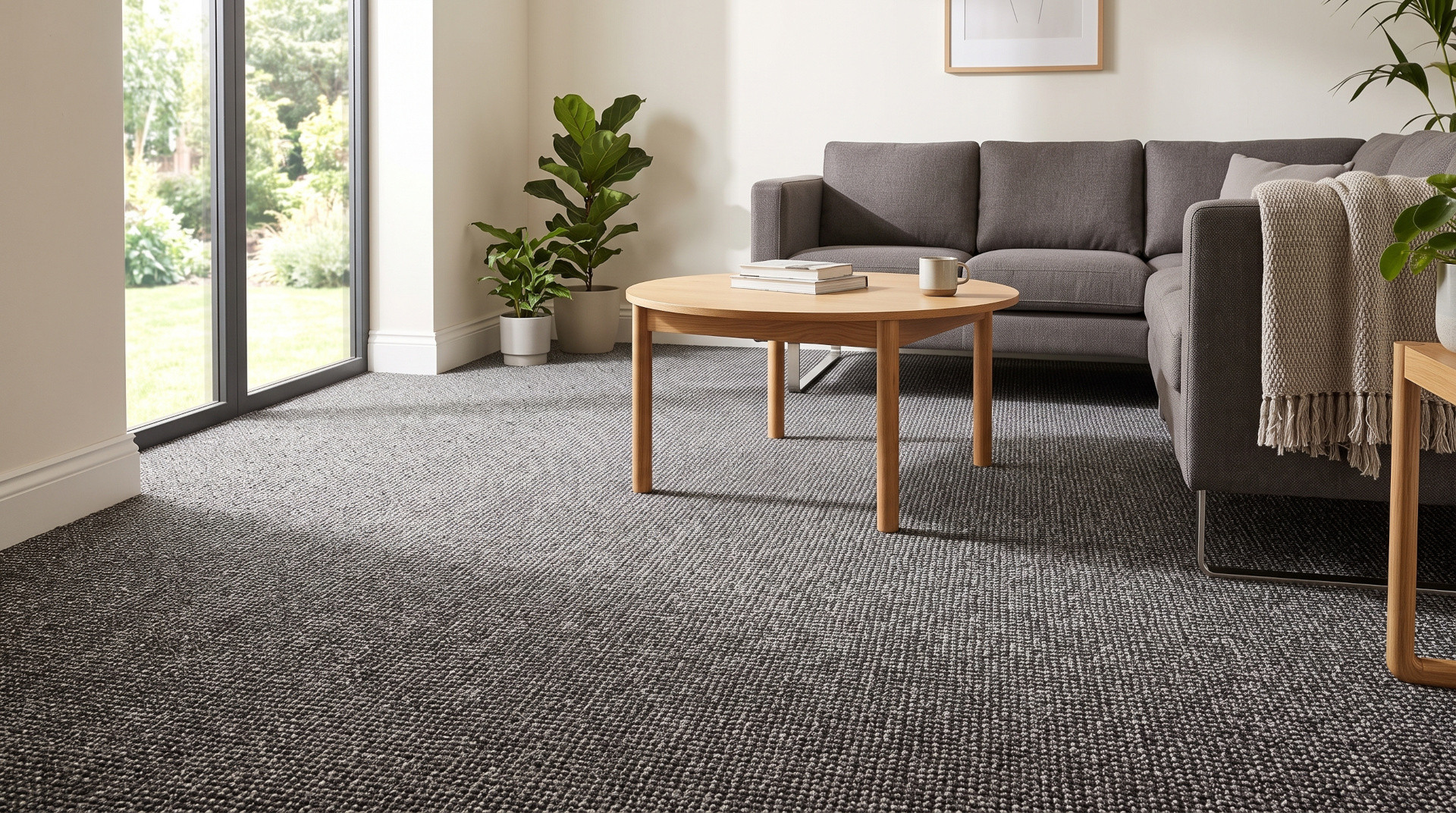
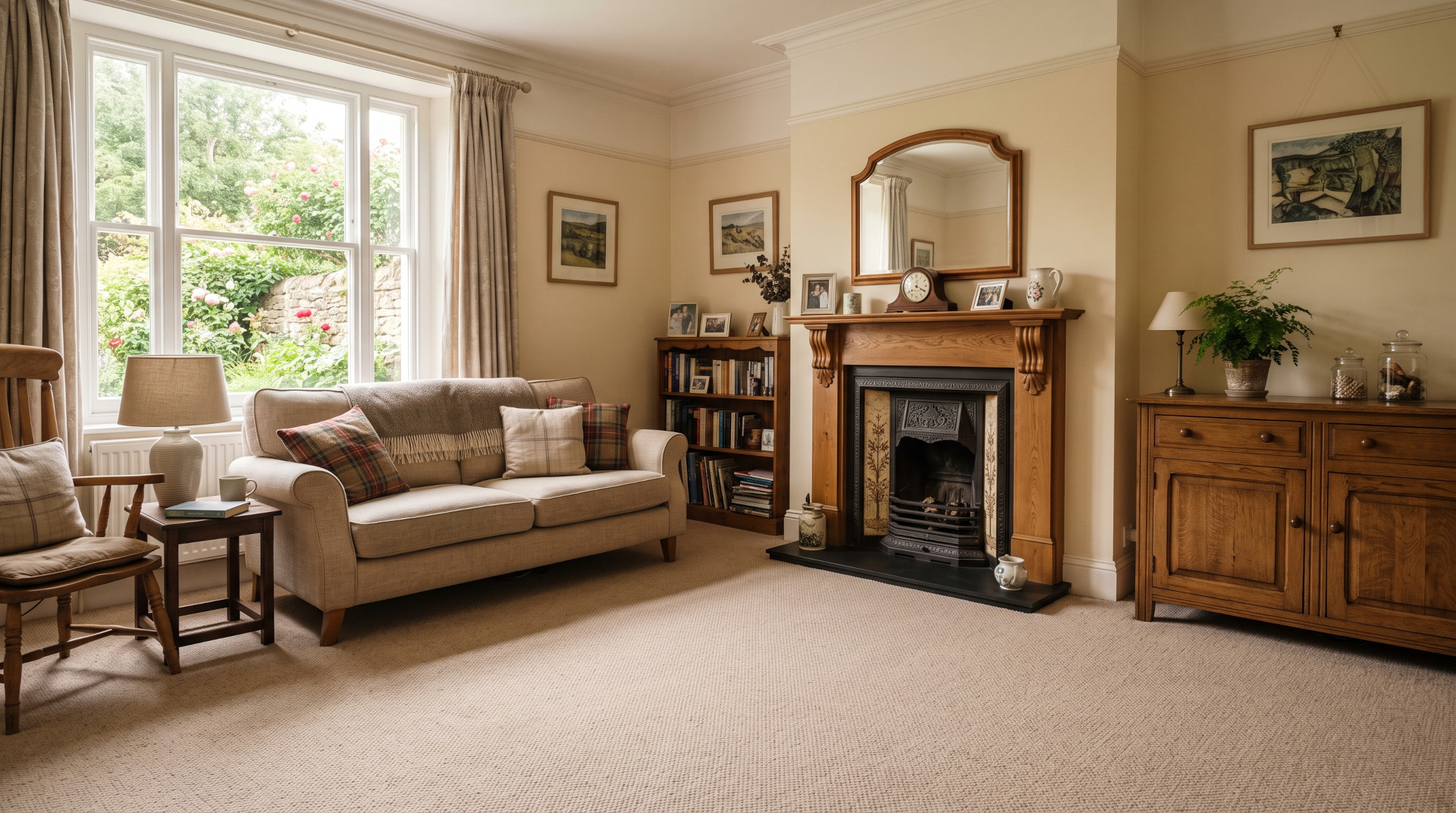
These are wool’s natural home. Low to moderate traffic, comfortable underfoot, and the warmth and sound-dampening are a real bonus. A wool blend in a mid-tone neutral is a brilliant all-rounder for either.
Dining Rooms
Wool works here as long as you are prepared to deal with spills quickly. A patterned wool blend hides marks better than a plain colour and forgives the occasional dropped forkful.
Hallways and Stairs
This is where wool starts to struggle. Hallways see the highest concentration of dirt, grit and moisture from outdoors, all of which grind into wool fibres and shorten its life. Stairs add compression wear from foot traffic. Our guide to flooring for high-traffic areas covers this in more detail, but the short version is that a tough polypropylene or a blend with a high synthetic content usually makes more sense, unless you are committed to regular cleaning.
Bathrooms, Kitchens and Utility Rooms
Avoid wool here. Persistent moisture is wool’s enemy. A waterproof SPC vinyl or sheet vinyl is the right call.
How To Spot Quality Carpet With Wool
Not all wool carpets are equal. A few things to check before you buy:
- Pile density. Press your thumb into the carpet. A quality wool carpet feels dense and springy. If you can feel the backing easily, the pile is too sparse.
- Weight per square metre. Heavier is usually better. A good wool blend starts around 1,500 g/m² and goes up. Anything noticeably lighter is probably entry-level.
- Yarn twist. Tightly twisted yarn holds its shape better than loose, fluffy yarn. The tighter the twist, the more resistant the carpet is to crushing.
- Backing material. A good jute or woven textile backing is a sign of quality. Cheap foam or rubber backings are usually a warning sign.
- Country of origin. British wool and New Zealand wool are both excellent. If the origin is not stated, ask.
When you visit our Croydon showroom on Purley Way, you can see and feel the difference between ranges in person. Bring a small fabric swatch from your sofa or curtains and hold it against a few samples. Lighting in a showroom flatters everything, so it is worth checking your shortlist at home too. Ask us for an off-cut to take away. Most ranges we stock are happy to provide one.
How To Care For Carpet With Wool So It Lasts Decades
Think of wool carpet like a cashmere jumper. Treat it kindly and it will look beautiful for years. Abuse it and it will pill, shrink or felt within months.
The Weekly Routine
Vacuum at least twice a week, more often in high-traffic spots. Use a vacuum with a brush bar, but turn the beater bar off (or use the hard-floor setting) for the first few weeks after fitting. Wool sheds loose fibres when new, and an over-enthusiastic beater bar can pull tufts.
The Spill Rule
Blot, do not rub. Rubbing pushes the spill deeper into the pile and roughs up the fibres. Use a clean white cloth, work from the outside of the stain inward, and change the cloth as it picks up the spill.
The Annual Deep Clean
Plan a professional clean every 12 to 18 months. Use a cleaner that specifically states it is safe for wool. Many standard carpet cleaners are too alkaline for wool and will damage the fibres over time.
What to Avoid
- Steam cleaning. The heat and moisture can cause wool to shrink or distort.
- Bleach, ammonia, or any “heavy duty” stain remover. They will strip the natural oils from the wool.
- Soaking. A wet wool carpet is a recipe for mildew and shrinkage.
Looked after properly, a good wool carpet should last 20 years or more in a typical living room. A badly maintained one can be ruined in a single bad clean. The difference really is in the routine.
Carpet With Wool FAQs
Is carpet with wool better than synthetic?
It depends on what you mean by “better”. Wool feels softer, recovers from compression better, regulates temperature naturally, and lasts longer with care. Synthetics are cheaper, more stain-resistant, and easier to live with in busy households with kids or pets. The honest answer is that wool is the better material, but synthetic is often the better choice for the way some families actually live.
How much does wool carpet cost?
Pure wool carpets typically start around £40 to £50 per square metre and rise quickly from there for premium ranges. Wool blends are usually £20 to £40 per square metre depending on the wool content and quality. At Flooring Factory Outlet, our clearance carpet range starts from £8.99 per square metre, with wool and wool-blend options included as stock rotates.
Can you clean wool carpet with a steam cleaner?
No, we would not recommend it. The combination of high heat and moisture can cause wool to shrink, distort or felt. Use a dry extraction method or a cleaner specifically labelled as safe for wool instead.
Is wool carpet suitable for people with allergies?
Surprisingly, often yes. Wool’s natural scales trap dust and allergens in the pile rather than releasing them into the air, which is the opposite of what most people expect. Regular vacuuming with a HEPA-filtered vacuum keeps things under control. If allergies are severe, talk to your doctor before fitting any carpet.
How do I know if a carpet is genuinely wool?
Look at the label. UK and EU law require carpets to declare fibre content by percentage. “100% wool” or “80% wool, 20% nylon” tells you exactly what you are getting. If the label is missing or vague, treat it with suspicion. Cheap “wool-look” or “wool-touch” products are almost always pure synthetic.
Does wool carpet fade in sunlight?
All carpets fade a little in strong direct sunlight over years, but wool is more colourfast than most synthetics. Rotate your furniture occasionally and use curtains or blinds in the brightest part of the room to slow it down. Fading is gradual rather than dramatic, so you are unlikely to notice it week to week.
How long does carpet with wool last?
A quality wool carpet in a typical living room should last 20 years or more, often 25 to 30 with good care. Wool blends generally last 15 to 20 years. Cheap synthetics might give you 8 to 12 years before the pile visibly mats. Wool is the long game.
Find Your Perfect Carpet With Wool at Flooring Factory Outlet
Wool is one of those upgrades where you genuinely feel the difference from day one. Walking onto a wool carpet after years of synthetic is a small revelation. The pile is softer, the room is quieter, and the floor just feels more substantial underfoot.
Our Croydon showroom on Purley Way stocks a wide range of wool and wool-blend carpets at clearance prices, starting from £8.99 per square metre. Because we source end-of-line and clearance stock directly from top UK manufacturers, you can take home a premium wool carpet with savings of up to 70% off typical high street prices. Pop in for an off-cut to test at home, or call our team on 020 3004 6630 to chat through which range suits your room and your budget. Open six days a week with over 400 free parking spaces.