When choosing timber for a home, workshop, or construction project, we often look at the aesthetics first. The deep swirl of walnut, the golden warmth of oak, or the dramatic grain of exotic hardwoods can instantly capture our attention. However, looks can be incredibly deceiving in the world of wood. Beneath the surface patterns lies a fundamental mechanical property that determines how well a specific piece of timber will withstand the realities of daily life: surface hardness.
For over a century, the international timber industry, architects, and woodworkers have relied on a single standardized metric to evaluate this property: the Janka hardness test. Whether you are installing a new solid wood floor designed to withstand the heavy paws of family pets, building a rustic dining table, or selecting timber for delicate hand-carvings, understanding this measurement is essential.
This comprehensive guide explores the mechanics of this famous test, unravels its fascinating historical origins, breaks down how it is applied in modern industries, and provides an extensive reference list of common timber species and their corresponding hardness ratings.
Jump to section
- What is the Janka Hardness Test?
- Deciphering the Units of Measurement
- The Origin and History of the Scale
- Modern Applications: How the Test is Used Today
- Hardwood Flooring Selection
- Tooling, Machinery, and Workability
- Architectural Specification and Structural Engineering
- Comprehensive Timber Species Hardness Directory
- Navigating the Limitations of the Rating System
- Dimensional Stability
- The Role of Protective Finishes
- Intended Application Over Pure Strength
What is the Janka Hardness Test?
At its core, the Janka hardness test is a mechanical property evaluation that measures a wood species’ structural resistance to indentation, denting, and localized impact wear. It provides a definitive, empirical answer to a vital question: how much physical abuse can this timber take before its structural surface yields and deforms?
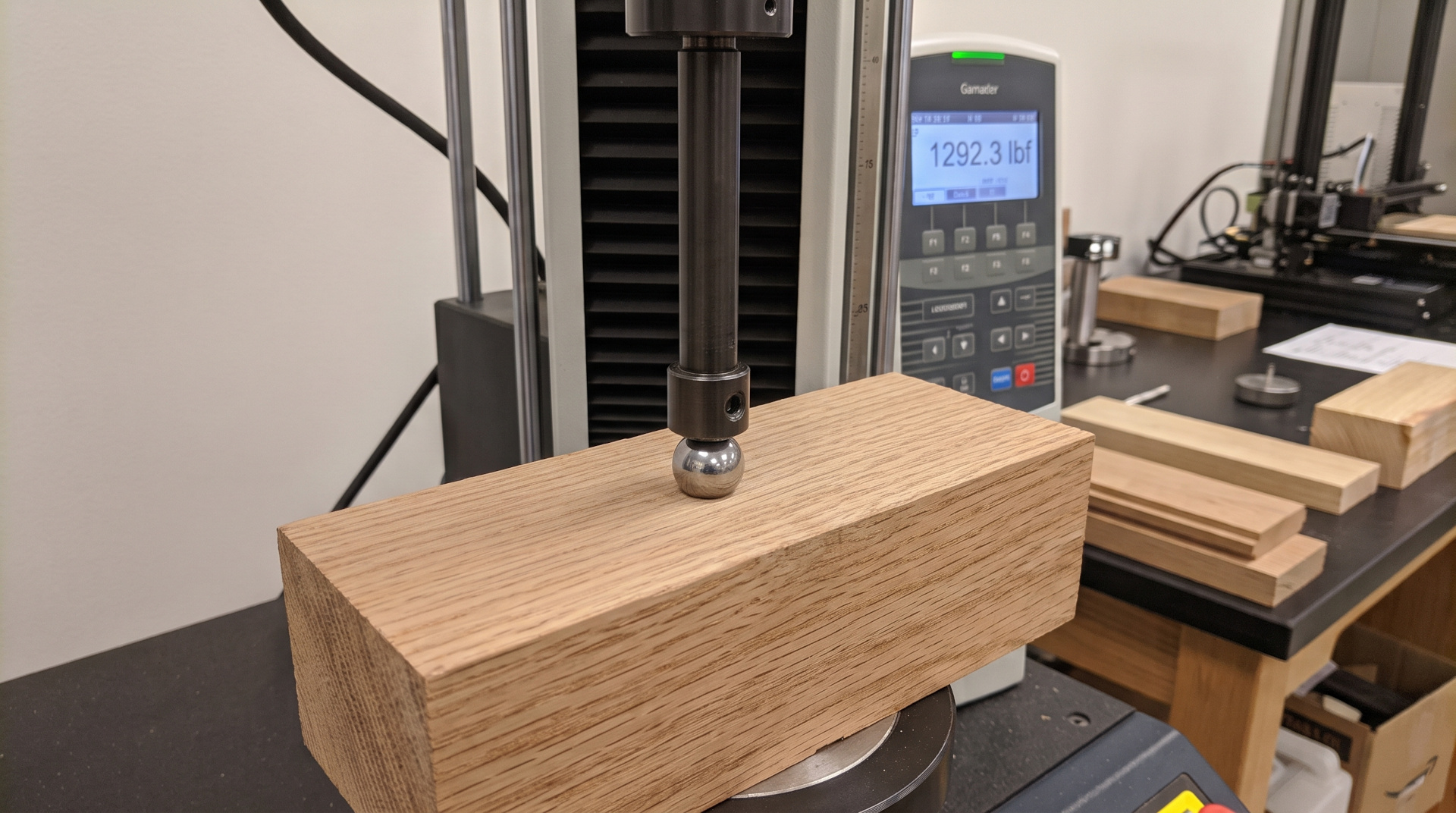
The test itself follows a deceptively simple, highly controlled laboratory procedure. To conduct the test, technicians place a solid, knot-free specimen of timber into a specialized mechanical press. A highly polished steel ball bearing measuring exactly 11.28 millimetres (0.444 inches) in diameter is then systematically forced into the face of the wood.
The compression continues until the steel ball is embedded precisely halfway into the timber, meaning it has penetrated to the exact depth of its widest point, or its radius. At the exact millisecond the ball reaches this halfway immersion point, the machine records the total amount of physical force required to achieve the indentation.
Why 11.28 millimetres? The choice of this specific measurement was a stroke of mathematical genius. When a sphere of 11.28 millimetres is embedded halfway into a material, the circular footprint or cross-sectional area of the indentation left behind measures exactly 100 square millimetres—or precisely one square centimetre. This elegant standardization makes the underlying engineering calculations exceptionally clean when translating force into localized resistance.
To ensure the integrity of the data, the testing process must adhere to strict environmental controls. Because wood is a natural, hygroscopic material, its structural density fluctuates wildly based on moisture content. As timber absorbs water, its cellular walls soften, making it significantly easier to dent. Conversely, as wood dries out, it shrinks, hardens, and compacts.
To create a level playing field, all specimens must be carefully seasoned to an standardized moisture content of roughly 12 percent. Furthermore, technicians conduct multiple pressings across different sections of the timber plank, testing both the flat grain and the edges, before calculating an average number. This average becomes the official rating for the species.
Deciphering the Units of Measurement
One of the most confusing aspects of researching wood hardness online is encountering a variety of different numbers and units depending on where the study was published. Because the test is used globally, the recorded force is expressed in different measurement systems based on regional engineering standards:
- Pounds-force (lbf): This is the dominant standard used in the United States and across North American lumber markets. If you see a rating expressed simply as a number without a unit, it is highly likely written in pounds-force.
- Newtons (N) and Kilonewtons (kN): Preferred in scientific research, engineering contexts, and across much of mainland Europe and the United Kingdom, this metric unit measures pure force. One kilonewton is equal to 1,000 newtons.
- Kilograms-force (kgf): Occasionally encountered in older European or Asian technical manuals, this unit measures the gravitational force exerted on a mass of one kilogram.
While the units vary, the core rule of interpretation remains entirely universal: the higher the number on the scale, the harder, denser, and more dent-resistant the wood species is. A low score indicates a soft, easily compressed timber, while an astronomical score indicates a material so dense it can break saw blades and dull drill bits in seconds.
The Origin and History of the Scale
To truly appreciate the utility of the test, we must step back in time to the turn of the twentieth century. The story begins with an Austrian wood researcher and forestry scientist named Gabriel Janka. Born in the mid-1860s, Janka spent his career deeply embedded in the study of timber physics, seeking ways to scientifically classify the vast array of Alpine and international woods used in European engineering and manufacturing.
During the late nineteenth century, a Swedish metallurgical engineer named August Brinell had revolutionized the metalworking industries by developing the Brinell hardness test. Brinell’s method involved pressing a hardened steel ball into a piece of metal under a fixed load and measuring the resulting indentation area. It was an elegant system for uniform, isotropic materials like iron, brass, and steel.
Gabriel Janka recognized the genius of Brinell’s approach but understood that wood presents a unique set of challenges that metal does not. Wood is anisotropic and highly irregular; it features alternating bands of soft earlywood and dense latewood, directional grain structures, and internal cellular voids. Simply applying a fixed weight to a ball and measuring the shallow dent, as Brinell did, yielded wildly inconsistent results on timber due to elastic rebound and grain tearing.
In 1906, while working under the umbrella of civil research and later collaborating with international forestry institutions, Janka completely turned Brinell’s methodology on its head. Instead of applying a fixed force and measuring a variable depth, Janka proposed maintaining a fixed depth—precisely half the diameter of the ball—and measuring the variable force required to get there. By sinking the ball halfway into the wood, the test bypassed superficial surface irregularities and captured a true cross-sectional snapshot of the wood’s structural density.
A major milestone in the global adoption of Janka’s invention occurred through the work of the United States Department of Agriculture’s Forest Products Laboratory based in Madison, Wisconsin. As global industrialisation accelerated, the American government desperately needed an empirical, scientific database to categorize its vast domestic timber resources for railway sleepers, ship building, and heavy manufacturing. Researchers at the laboratory embraced Janka’s methodology, rigorously testing thousands of native and imported species.
By 1923, the American Society for Testing and Materials had officially formalized and standardized the procedure into its material testing protocols. Over the subsequent decades, the British Standards Institution and other international normalization bodies adopted the methodology, cementing Gabriel Janka’s clever engineering trick as the definitive global standard for the timber trade.
Modern Applications: How the Test is Used Today
The insights provided by a wood’s hardness score are used across a vast spectrum of creative and commercial industries. Understanding these numbers allows professionals and consumers to make highly informed, cost-effective decisions.
Hardwood Flooring Selection
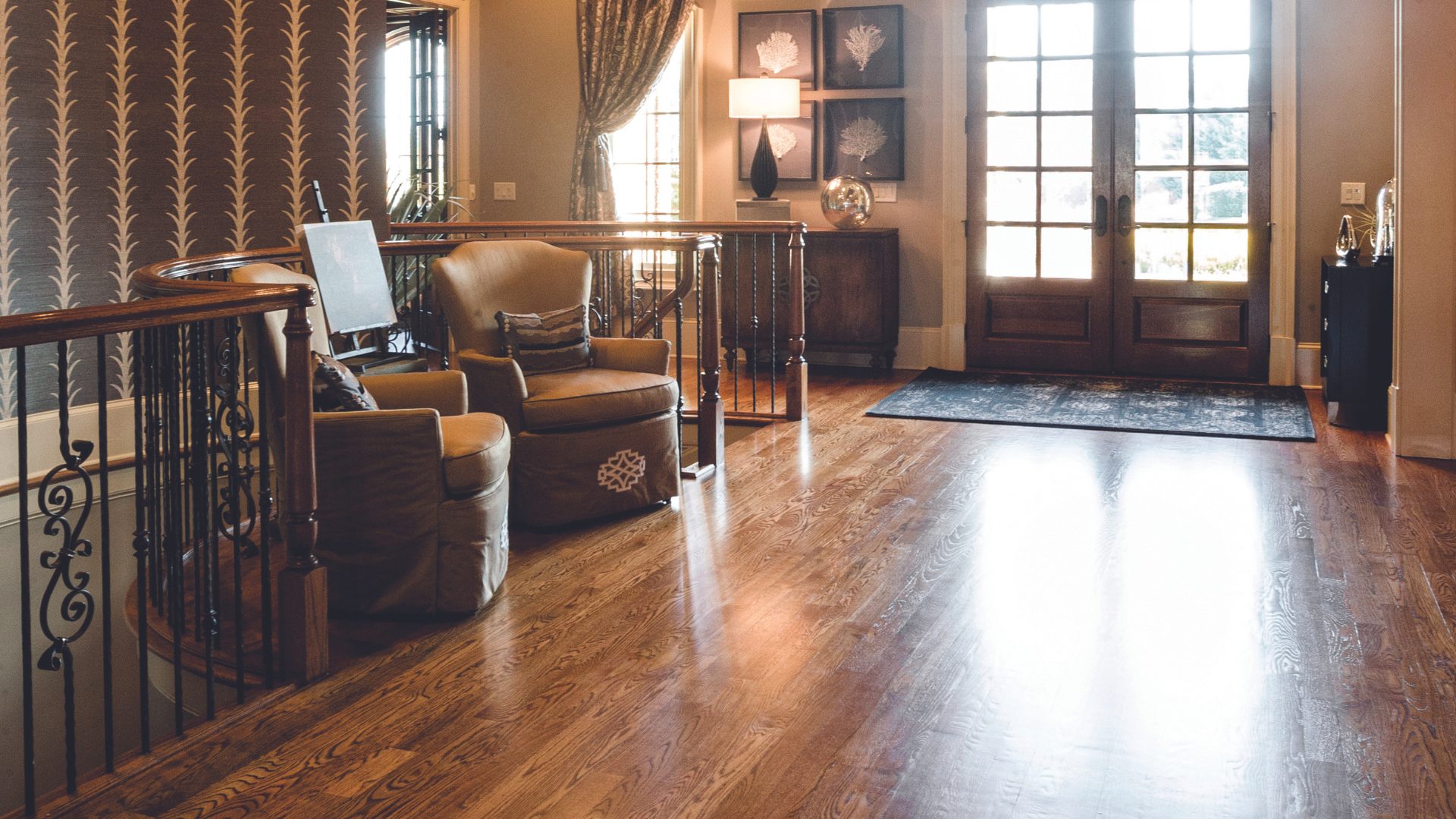
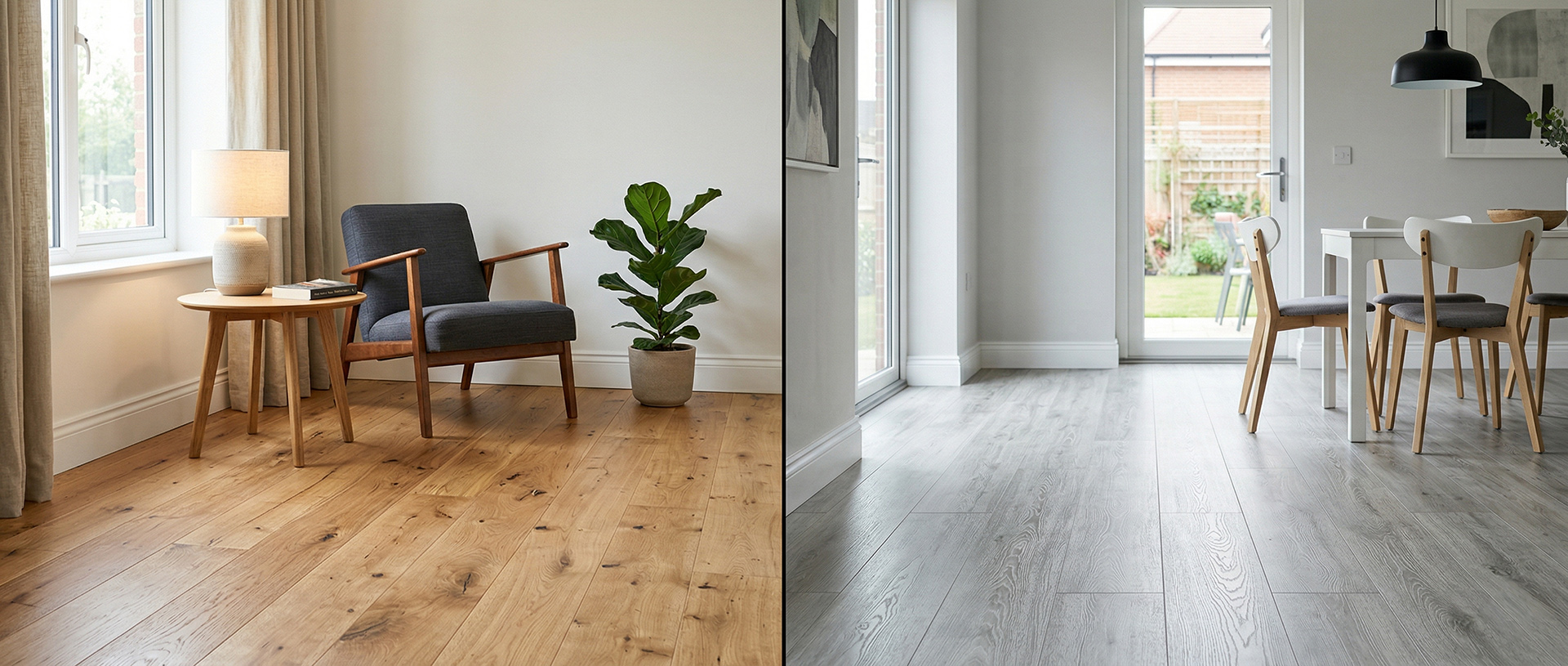
The residential and commercial flooring market is arguably the largest consumer of hardness data. Flooring undergoes relentless physical stress from high heels, dragged furniture, dropped kitchen utensils, and active pets. By consulting the scale, property owners can accurately predict how a floor will hold up over time.
For instance, a low-traffic guest bedroom can easily accommodate a beautiful, softer hardwood. However, a bustling commercial retail space, an entrance hallway, or a busy family kitchen demands a timber species with a significantly higher rating to prevent the surface from looking battered and worn within a matter of months.
Tooling, Machinery, and Workability
For a joiner, carpenter, or furniture maker, the hardness rating dictates exactly how a project must be approached in the workshop. Timber species with exceptionally high scores are notoriously brutal on machinery. They generate intense friction, which can rapidly dull expensive saw blades, overheat router bits, and cause wood to scorch or burn during cutting.
Furthermore, ultra-hard woods are incredibly prone to splitting if a craftsman attempts to drive a screw or nail directly into the face without pre-drilling a precise pilot hole. Knowing the rating allows woodworkers to budget for extra sharpening time, select the correct specialized carbide-tipped tooling, and adjust the feed rates of their machinery to prevent workshop accidents.
Architectural Specification and Structural Engineering
Architects and structural engineers utilize hardness ratings alongside bending strength and density metrics when specifying timbers for heavy-duty structural applications. Timber bridge decks, industrial factory floors, railway sleepers, boardwalks, and heavy external cladding all require materials that can resist localized compression under heavy structural loads.
Conversely, for applications where structural weight must be kept to an absolute minimum or where acoustic resonance is required—such as the soundboards of acoustic guitars, violins, and pianos—specialists intentionally seek out stable, uniform woods with exceptionally low ratings.
Comprehensive Timber Species Hardness Directory
The following comprehensive list provides the hardness test results for a vast range of domestic and exotic wood species. The ratings are presented in order from the softest, most fragile materials to the dense, virtually indestructible timbers at the absolute pinnacle of the scale.
All figures represent standard side hardness measured in pounds-force (lbf).
- Balsa: 70 lbf – The undisputed lightweight of the commercial timber world, highly fragile and easily dented with a fingernail.
- Quaking Aspen: 350 lbf – A very lightweight domestic wood frequently used for matches, crates, and paper pulp.
- Eastern White Pine: 380 lbf – A staple of traditional joinery, interior trim, and hobbyist model making.
- Western Red Cedar: 350 lbf – Highly valued for its natural weather resistance, though physically soft and prone to scratching.
- White White Pine: 420 lbf – A standard, easy-to-work soft timber frequently utilized in light construction framing.
- Redwood: 450 lbf – Prized for outdoor decking and garden furniture due to rot resistance, despite its low density.
- Chestnut: 540 lbf – A classic, warm-toned wood with moderate durability, well-suited for decorative furniture.
- Red Alder: 590 lbf – A smooth, uniform hardwood popular in cabinet manufacturing and electric guitar bodies.
- Larch: 590 lbf – A durable conifer with a dense grain structure, frequently specified for external timber cladding.
- Western Juniper: 626 lbf – A rugged, deeply characterful wood used primarily for rustic furniture and fence posts.
- European Alder: 650 lbf – A highly workable timber that excels in underwater structural applications and cabinetry.
- Southern Yellow Pine: 690 lbf – A tough, resinous softwood widely relied upon across the construction industry for structural framing.
- Silver Maple: 700 lbf – Often classified under the umbrella of soft maple, offering decent workability for interior furniture.
- Douglas Fir: 710 lbf – An exceptionally strong structural softwood with a high strength-to-weight ratio for rafters and beams.
- Sycamore: 770 lbf – Known for its distinctive lace-like grain pattern, perfect for fine joinery and kitchen dresser tops.
- Genuine Mahogany: 800 lbf – The historic gold standard for luxury furniture making, offering unparalleled stability and carving properties.
- African Mahogany (Khaya): 830 lbf – A popular, sustainable alternative to traditional mahogany with a highly lustrous interlocking grain.
- Cambara Mahogany: 860 lbf – A utility-grade imported hardwood used extensively for deck framing and exterior trim boards.
- Teak: 1,000 lbf – World-renowned for its high natural oil content, making it the premier choice for luxury marine decking.
- Black Walnut: 1,010 lbf – A highly sought-after premium furniture timber boasting rich, dark tones and excellent dimensional stability.
- Albarco: 1,020 lbf – A large South American timber prized for its straight grain, stability, and resistance to marine borers.
- Soft Maple: 950 lbf – A versatile commercial hardwood commonly selected for turned objects, wooden toys, and kitchen cabinets.
- English Oak: 1,120 lbf – The iconic, deeply historic building block of British timber framing, furniture, and cathedral roofs.
- African Walnut: 1,150 lbf – An attractive, golden-brown timber that provides a striking aesthetic for high-end flooring and veneers.
- L构造Carbonised Bamboo: 1,180 lbf – Bamboo that has been pressure-steamed to caramelise its natural sugars, resulting in a richer colour but a slightly reduced hardness.
- American Cherry: 950 lbf – Highly esteemed for its smooth texture and a warm reddish-brown patina that deepens beautifully with exposure to sunlight.
- Black Cherry: 950 lbf – A premier cabinetry timber that finishes to an incredibly smooth, mirror-like high sheen.
- Heart Pine: 1,225 lbf – Reclaimed timber sourced from old-growth trees, containing dense growth rings and heavy resin content.
- Yellow Birch: 1,260 lbf – A tough, heavy, and highly shock-resistant wood widely utilised for industrial flooring and tool handles.
- Iroko: 1,260 lbf – A fiercely durable African hardwood frequently used as a robust, low-maintenance alternative to teak for outdoor gates.
- Caribbean Heart Pine: 1,280 lbf – A remarkably dense pine species that rivals many traditional hardwoods in terms of structural wear resistance.
- Northern Red Oak: 1,290 lbf – The absolute benchmark of the global hardwood industry, against which all other flooring timbers are judged.
- American Beech: 1,300 lbf – A dense, uniform, closed-grain wood highly favoured for workbenches, food-safe chopping boards, and tool handles.
- European Beech: 1,300 lbf – Exceptionally popular across the UK and Europe for high-use furniture, school desks, and bentwood chairs.
- White Ash: 1,320 lbf – Famous for its incredible elasticity and shock absorption, making it the definitive material for sports equipment like hockey sticks and oars.
- Tasmanian Oak: 1,350 lbf – A premium Australian eucalypt hardwood heavily utilised for contemporary architectural joinery and flooring.
- White Oak: 1,360 lbf – Denser and more moisture-resistant than its red counterpart, making it the premier choice for tight cooperage and whiskey barrels.
- Australian Cypress: 1,375 lbf – A highly characterful, knotty timber that boasts surprising hardness and natural termite resistance for residential flooring.
- Natural Bamboo: 1,380 lbf – Raw, un-carbonised bamboo fibers processed into a highly durable, eco-friendly contemporary flooring alternative.
- Caribbean Walnut: 1,390 lbf – A dense tropical timber featuring a dramatic, high-contrast color palette well-suited for statement flooring.
- Hard Maple: 1,450 lbf – Also known as sugar maple, this ultra-dense wood is the standard choice for professional basketball courts and bowling alleys.
- Sweet Birch: 1,470 lbf – A heavy, hard wood that delivers outstanding structural wear resistance for high-traffic staircase treads.
- Sapele: 1,510 lbf – An African hardwood showing a gorgeous, regular striped figure, often used for premium musical instruments and external doors.
- Zebrawood: 1,575 lbf – A striking exotic wood featuring dark brown stripes on a cream background, utilized primarily for luxury accent veneers.
- African Padauk: 1,970 lbf – A unique timber that displays a vivid crimson-orange hue when freshly cut, drying to a rich burgundy over time.
- Batu (Red Balau): 2,100 lbf – A heavy-duty Asian timber commonly specified for industrial boardwalks, bridges, and heavy-use commercial decking.
- Brazilian Cherry (Jatoba): 2,350 lbf – An immensely popular exotic flooring choice that offers extreme resistance to deep structural dents and scratches.
- Massaranduba: 3,190 lbf – A dense South American redwood so heavy it sinks completely in water, used for heavy marine construction.
- Cumaru (Brazilian Teak): 3,200 lbf – A tough exotic hardwood with an interlocking grain that easily shrugs off heavy foot traffic and outdoor weather.
- Ipê (Brazilian Walnut): 3,684 lbf – A legendary wood with a commercial fire rating comparable to concrete and steel, heavily specified for major public boardwalks.
- African Blackwood: 3,670 lbf – An incredibly dense, dark wood prized by instrument makers for woodwind instruments like clarinets and oboes.
- Camelthorn: 3,680 lbf – A slow-growing African desert timber with a dense cellular matrix that easily resists extreme structural wear.
- Snakewood: 3,800 lbf – Renowned for its rare, snake-like skin patterns and intense weight, used exclusively for luxury walking canes and violin bows.
- Gidgee: 4,270 lbf – An Australian acacia species that is so incredibly hard it was historically used by indigenous populations to fashion heavy combat shields.
- Quebracho: 4,570 lbf – Literally translated from Spanish as “axe-breaker,” this timber is extensively used in heavy industrial engineering.
- Baraúna: 4,800 lbf – A black, intensely heavy wood found in South America, prized for its absolute immunity to rot and insect attack.
- Australian Buloke: 5,060 lbf – The undisputed champion of the wood world. This ironwood species possesses a grain structure so dense it behaves more like a industrial composite material than natural timber.
Navigating the Limitations of the Rating System
While the scale is an invaluable asset for anyone buying timber, it is dangerous to view it as a solitary metric for wood quality. A high rating guarantees resistance to blunt force impact dings and furniture indentations, but it tells you absolutely nothing about the other physical behaviors of the wood.
Dimensional Stability
Some of the hardest exotic woods on the planet suffer from poor dimensional stability. This means that as seasonal humidity shifts, the wood fibers can expand and contract violently. If an unseasoned, ultra-hard wood is tightly installed as flooring in a damp environment, it can easily buckle, warp, or pull away from its subfloor fasteners despite its impressive hardness.
The Role of Protective Finishes
A common misconception is that buying a hard timber means your floor will never scratch. It is vital to separate denting from scratching. The test measures a wood’s resistance to deep, structural crushing forces (denting). It does not measure how easily a sharp object, like a stone caught in a shoe or a dropped knife, can cut through the surface finish (scratching).
Even the hardest wood will show fine surface scratches if its protective layer of polyurethane, oil, or lacquer is damaged. Applying a high-quality, commercial-grade surface coating is always necessary to protect your investment, regardless of where the timber sits on the scale.
Intended Application Over Pure Strength
Harder is not automatically better. For example, trying to carve an intricate decorative fireplace mantle piece out of an exotic hardwood like ipê would be an absolute nightmare; it would destroy your hand tools and split along its interlocking grain lines. In that scenario, a beautifully stable, softer wood like genuine mahogany or American cherry is vastly superior, despite their lower numbers on the scale.
Ultimately, Gabriel Janka’s brilliant testing method succeeded not because it established a hierarchy of “good” or “bad” woods, but because it provided a clear window into how a tree’s cellular structure responds to physical work. By matching the specific numerical rating of a species to the precise environmental demands of your design project, you can ensure that the timber you select will remain both beautiful and structurally sound for generations to come.