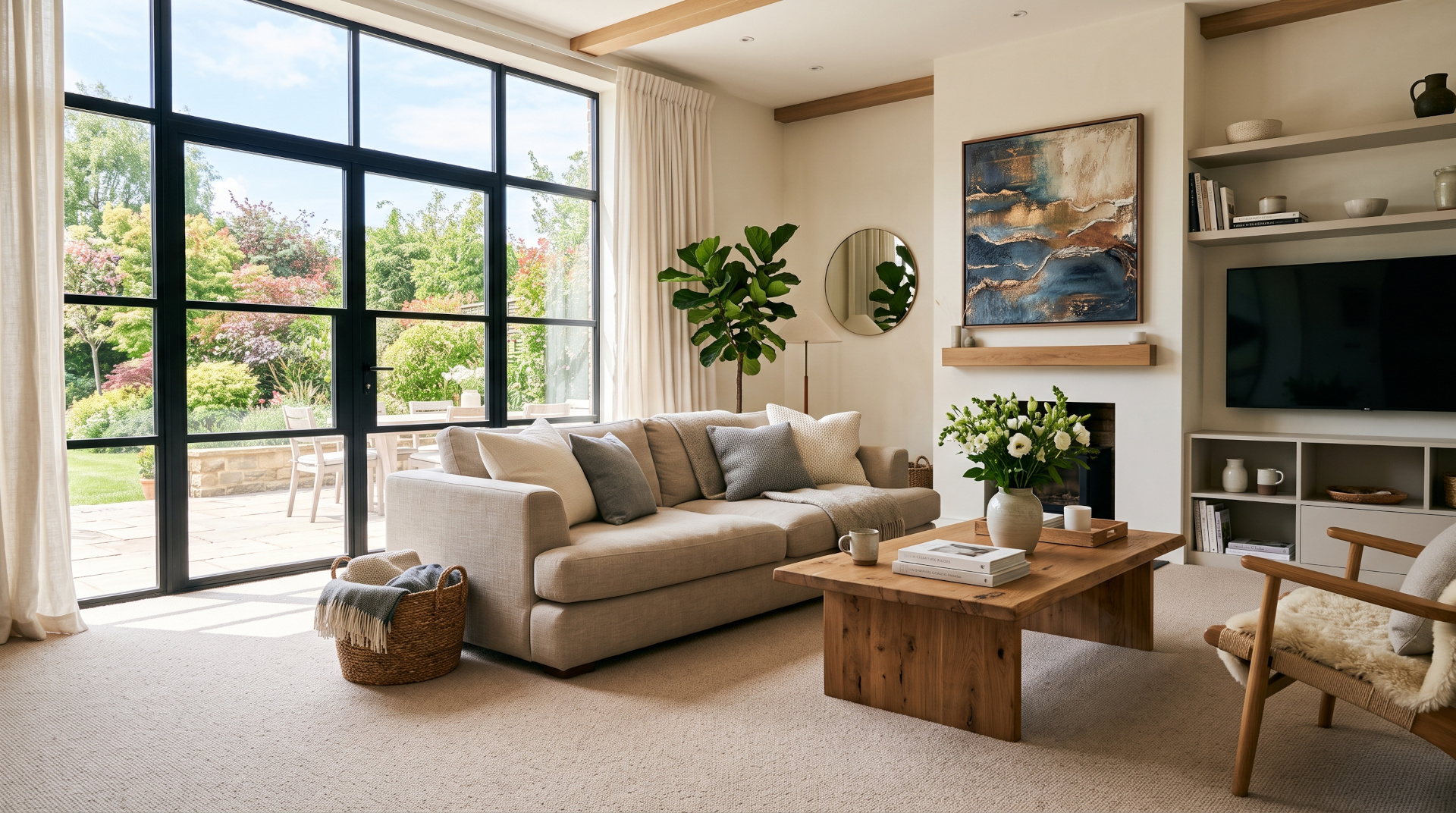
Hard floors look fantastic in a living area magazine shoot. In real life, with kids dropping juice cartons and dogs skidding round the coffee table, hard flooring is less forgiving than it first appears. A carpet living area trades the wipe-clean convenience for warmth, sound absorption and a softer landing when something gets dropped.
This guide covers how to choose one well. We will look at pile types, fibres, colour, underlay, fitting and the maintenance routine that keeps a living area carpet looking newer for longer.
Jump to section:
- Why a carpet living area beats hard flooring for everyday comfort
- The carpet pile types that work best in a living area
- Choosing a fibre: wool, polypropylene or blend
- Picking a colour that flatters your carpet living area
- Underlay: why the bit underneath matters most
- Measuring, fitting and accessorising your carpet living area
- Looking after the carpet in your living area
- Frequently asked questions
Why a carpet living area beats hard flooring for everyday comfort
Living areas take more abuse than almost any other room in the house. The same square metres get the morning sun, the daily TV-watching slump, the homework sprawl, the dog walk aftermath and the Sunday film marathon. Hard floors handle the practical side reasonably well. They fail on the human side.
A carpeted living area absorbs sound rather than bouncing it around the room. It cushions dropped mugs instead of smashing them. It insulates the floor so bare feet are not punished on a winter morning. For anyone with toddlers, older relatives, or a back that complains about cold tiles underfoot, those daily wins add up quickly.
The honest counter-argument is cleaning. Carpets stain. Hard floors wipe. That is a real trade-off, not a marketing slogan.
Most spills on a modern carpet come out quickly with the right approach. Routine vacuuming does the rest. Living with a carpeted living area is easier than it was a generation ago, because stain-resistant fibres and tighter pile constructions have moved on.
If you want both worlds
The carpet pile types that work best in a living area
Pile is the way the carpet fibre stands up from the backing. The pile type you pick changes how the carpet feels, how it wears, and how forgiving it is when someone spills red wine on it.
Saxony piles are deep and slightly twisted, with the fibres standing mostly upright. They feel plush underfoot. They also show footprints and vacuum tracks, and a heavy piece of furniture can leave a visible impression that takes days to bounce back. Saxony suits a formal living area that does not see daily family chaos.
Twist piles are the everyday workhorse. The fibres are twisted tightly together, which gives a more textured, less uniform finish. They bounce back well, do not show footprints as obviously, and handle busy living areas without complaint. This is the most popular choice in family homes.
Loop piles (sometimes called Berber) use small loops of yarn rather than cut ends. They are rugged, hardwearing and good at hiding marks. They can snag on pet claws, though, so they are less forgiving with dogs and cats in the mix.
Velvet or plush piles are the most indulgent option. They are densely packed, smooth and almost shimmery. They mark if you brush them the wrong way, so they suit a sitting room used for entertaining rather than a busy family living room.
For most buyers, twist pile is the right starting point for a carpet living area. It looks smart, takes the rough and tumble, and forgives the occasional spill.
Choosing a fibre: wool, polypropylene or blend
Once you have picked a pile type, the next decision is the fibre. Three options make up the vast majority of what we stock for living areas.
Polypropylene is the practical, budget-friendly choice. It is stain-resistant by design, easy to clean, and soft enough to feel comfortable underfoot. It will not have the longevity of a premium wool, but it does the job for family living areas and rental properties where wear and tear is expected. Most of the clearance carpet rolls at Flooring Factory Outlet sit within this fibre family.
Wool is the natural, premium choice. Soft, hardwearing and naturally flame-resistant, wool ages gracefully rather than wearing out. Yes, it costs more than polypropylene. After a decade of use, wool still looks better than polypropylene does after a few. For a living area that is the heart of the home and is likely to keep the same carpet for ten years or more, wool is the right call if the budget stretches.
Blends (typically 80% wool, 20% synthetic, or similar mixes) sit in the middle. They give you much of the look and feel of wool, with a bit more stain resistance and a lower price tag. For many buyers, a blend is the practical sweet spot for this kind of room.
The right fibre depends on how you use the room. Pets and small children push the answer toward polypropylene or a stain-treated blend. A quiet sitting room with light use opens the door to wool.
Picking a colour that flatters your carpet living area
Colour does most of the heavy lifting in how a living area feels. The right carpet colour makes the room feel bigger, calmer, and more expensive than it is. The wrong one dates the room before the first coffee gets spilt on it.
Neutrals are the safe, broadly flattering choice. Warm beiges, soft greys and gentle taupes work with most furniture styles. They also disguise everyday dust between cleans, which is helpful if you have white sock traffic through the room.
Greys have been popular for a decade and remain the default for contemporary living areas. The shade you pick matters. Cool greys pair well with modern furniture, blues and crisp whites. Warm greys (sometimes called greige) sit more comfortably with traditional furniture, timber and earthy tones.
Darker colours (deep browns, charcoal, navy) hide marks and give the room a cocooning feel. They also show dust in the texture, which can read as dingy rather than cosy.
Lighter colours (cream, pale grey, light beige) make a small living room feel bigger and brighter. They also show every mark. Worth knowing if you have a moulting dog.
Colours shift dramatically between showroom lighting and your living room. The Flooring Factory Outlet team will lend you samples to take home, which removes most of the guesswork.
Underlay: why the bit underneath matters most
Underlay is the foam, rubber or felt layer that sits between the carpet and the floor. Most people treat it as an afterthought. It is not. Underlay does more for the feel and lifespan of a carpet than any other decision you make in a living area.
Good underlay:
- Cushions the carpet underfoot, which makes a cheap carpet feel premium and a premium carpet feel indulgent
- Absorbs impact, which protects the carpet fibres from being crushed by furniture and foot traffic
- Insulates the room against heat loss through the floor
- Reduces noise transmission between floors in a house
Cheap options rely on thin, low-density foam that compresses within a year. The carpet above it then looks worn out long before the fibres actually are.
For most living areas, an underlay of 10mm to 12mm thickness works well. PU foam is the most common choice for a busy living room. Rubber or felt underlays suit heavier wool carpets and give a firmer feel underfoot.
If your living area has underfloor heating, check the combined tog rating of the carpet and underlay before you buy. A thick PU foam underlay plus a dense wool carpet can block heat transfer if the tog total is too high for the system to push through. Check the heating manufacturer’s maximum, and confirm the tog values with your supplier before you commit.
If you are replacing an old carpet, the underlay is a “while you are at it” upgrade.
Measuring, fitting and accessorising your carpet living area
Measuring a living area for carpet is straightforward, but the small details catch people out.
Start by measuring the maximum length and width of the room at its widest points, then multiply for the square metre figure. Add 10% for cuts, seams and odd corners. If the room has a bay window, alcove or chimney breast, sketch the shape and bring it to the showroom so the team can work out the most efficient way to lay the carpet.
Door clearances are the most common fitting issue. A thicker carpet plus a new underlay often means the door will not open over it. Plan for this before the fitter arrives. Either plane the bottom of the door, remove it and trim it on a workbench, or accept a small step at the threshold.
For living areas with a doorway leading to a hard floor such as vinyl click flooring, a threshold strip (also called a door bar) finishes the join neatly. Matching profiles sit within the flooring accessories range at Flooring Factory Outlet. Bring a sample of both floors when choosing the strip, because the colour match matters.
If you are measuring a room for the first time, our how to measure a room guide walks through the process step by step.
For fitting, a competent DIYer can lay carpet in a simple rectangular living area with a few tools and a knee kicker. Awkward shapes, stairs and seam joins are usually worth paying a professional to handle. Flooring Factory Outlet can arrange measuring and fitting for carpets where the team has the availability. Confirm the current terms before booking.
Looking after the carpet in your living area
A decent carpet living area will last ten to fifteen years if it is looked after. A neglected one will look tired in five. The difference is the routine.
Vacuum at least twice a week in a busy family room. Once a week is fine for a quiet living area. Use a vacuum with a height-adjustable beater bar, and change the bag or empty the cylinder before it is full. A full vacuum does almost nothing.
Deal with spills quickly. Blot, do not rub. Rubbing pushes the spill deeper into the pile and damages the fibres. Use plain warm water first. If that does not shift it, use a carpet-specific spot cleaner according to the instructions.
Rotate the furniture occasionally. Heavy sofas left in the same spot for years create permanent indentations. Moving the layout by even 30cm every six months spreads the wear across the carpet.
Protect high-traffic zones. A runner or a rug in front of the sofa gives the carpet underneath a break. It also gives you somewhere to sit when the rest of the carpet is being cleaned.
Deep clean once a year. You can hire a machine, or pay a professional to do it. Either way, a proper deep clean pulls out the dirt that weekly vacuuming misses, and it resets the look of the carpet for another year.
Frequently asked questions
Is carpet a good choice for a living area?
Yes. A carpet living area is warmer, quieter and more forgiving underfoot than hard flooring. The trade-off is cleaning, which most modern carpets handle better than older styles.
What carpet pile is best for a living area?
For most family living areas, a twist pile is the practical choice. It is hardwearing, bounces back well, and does not show every footprint. Saxony and velvet piles are softer and more formal but show marks more readily.
Wool or polypropylene: which is better for a living room?
Wool is the premium option. It ages well, feels softer, and lasts longer. Polypropylene is the everyday option. It is cheaper, stain-resistant, and easier to clean. The right answer depends on budget and how the room is used.
How long does carpet last in a living area?
A good quality carpet in a typical family living area lasts around ten to fifteen years with proper care. A heavily used room with pets may see seven to ten years. A barely-used formal sitting room can easily stretch past fifteen.
What colour carpet is best for a small living area?
Light, neutral colours (warm beige, soft grey, cream) make a small living area feel bigger and brighter. The trade-off is that they show marks more easily. A medium-tone neutral is the most forgiving option for a small living room carpet.
Can I install carpet myself?
A confident DIYer can carpet a simple rectangular living area with basic tools. Stairs, awkward shapes and seam joins are usually worth paying a professional to handle. Flooring Factory Outlet can arrange fitting where availability allows.
How often should I clean the carpet in my living area?
Vacuum at least once a week, twice in a busy family room. Spot clean spills immediately. Deep clean once a year to reset the pile and pull out embedded dirt from the carpet.
Should I replace the underlay when I replace the carpet?
Yes. New carpet on flattened old underlay feels wrong underfoot, wears out faster, and costs you more in the long run. The underlay upgrade is a “while you are at it” job that pays for itself.
Want to see the colours and textures in person before you commit? Visit Flooring Factory Outlet at 66 Purley Way, Croydon, CR0 3JP, next to Matalan and The Range, with free parking. We have more than 120 carpet rolls in stock at any time, plus a clearance range of named carpets, remnants and selected ranges such as Merit, Essence and Symphony. Bring your room measurements and the team will help you work out how much carpet and underlay you need. To check current stock before you travel, call 020 3004 6630.