Carpets are more than just flooring—they bring essential warmth, comfort, and style to any home. In the UK, the choice of carpet is a major factor in home renovation and interior design, with the market valued at over £750 million and a strong focus on both luxury and practical, durable fibres. From ancient origins to the latest sustainable trends for 2025 and beyond, this comprehensive guide covers everything you need to know about buying, fitting, and maintaining the perfect carpet for your British home.
A Brief History of UK Carpets
Carpet weaving is an ancient craft, dating back over 2,500 years. The world’s oldest known example, the Pazyryk Carpet, discovered remarkably preserved under ice in Siberia, shows the early mastery of the craft. Ancient Persia became the true centre of carpet craftsmanship, developing intricate hand-knotted designs and vibrant natural dyes.
Through trade routes like the Silk Road, these luxurious textiles spread to India, China, and the Ottoman Empire before finally reaching Europe. The Industrial Revolution fundamentally changed the industry in Britain, introducing mechanised looms and tufting machines, making carpets affordable and incredibly popular in British homes. Today, UK carpet manufacturers combine traditional artistry, particularly with high-quality wool from British sheep, with modern, durable synthetic technology.
Carpet Types: Styles & Materials
Choosing the right carpet is a balance of aesthetics, foot traffic, and budget. Here are the main styles and materials widely available in the UK.
| Style | Description | Ideal Location | Key Benefit |
| Cut Pile (General) | Soft, plush, upright fibres. Includes Velvet, Saxony, and Frieze. | Bedrooms, formal living rooms. | Luxurious feel and deep comfort. |
| Saxony | A type of cut pile; long, dense, twisted fibres. | Master bedrooms, low-traffic areas. | Highly luxurious and smooth. |
| Frieze (Twist Pile) | Highly twisted, short fibres that curl. | High-traffic areas, stairs, hallways. | Extremely durable, hides footprints/shading. |
| Loop Pile (General) | Fibres looped through backing; includes Berber. | Hallways, family rooms, offices. | Durable, resilient, won’t snag. |
| Berber | Popular loop pile with large loops, often flecked. | Casual rooms, heavy-use areas. | Resilient, excellent for hiding dirt. |
| Cut and Loop | Combination of cut and loop fibres. | Any room. | Creates sculptured, patterned textures. |
| Flatweave (Woven) | Low-pile, tightly woven carpet (e.g., Axminster, Wilton). | Stairs, dining rooms, runners. | Exceptional longevity, pattern definition. |
Carpet Materials
1. Wool: A natural, premium fibre. It is flame-resistant, long-lasting, and retains its bounce (resilience). It is a major sector in the UK market.
2. Nylon (Polyamide): The strongest synthetic fibre. It is exceptionally durable, highly stain-resistant, and ideal for heavy-traffic areas.
3. Polypropylene (Olefin): The most budget-friendly option. It is inherently stain-resistant (bleach-cleanable), soft, and easy to clean.
4. Polyester (PET): Offers vibrant colours and a soft, luxurious feel. It’s also made from recycled materials in some modern blends.
5. Blends: Typically a mix of 80% wool and 20% synthetic (nylon or polypropylene) to balance the natural feel and resilience of wool with the durability and cost- effectiveness of a synthetic fibre.
The Carpet Installation Guide
A professional installation is highly recommended to ensure proper tension, seam alignment, and long-term durability, especially with large or patterned carpets.
Essential Steps for a Flawless Fit
1. Preparation: The subfloor must be clean, dry, and level. Remove all existing flooring and any nails or staples.
2. Underlay Installation: Laying a high-quality underlay is non-negotiable in the UK. It improves comfort, offers critical thermal and acoustic insulation, and significantly extends the carpet’s lifespan.
3. Gripper Rods: Strips of wood with sharp tacks (or pins) are secured around the perimeter of the room, about away from the skirting board. These rods anchor the carpet edges securely.
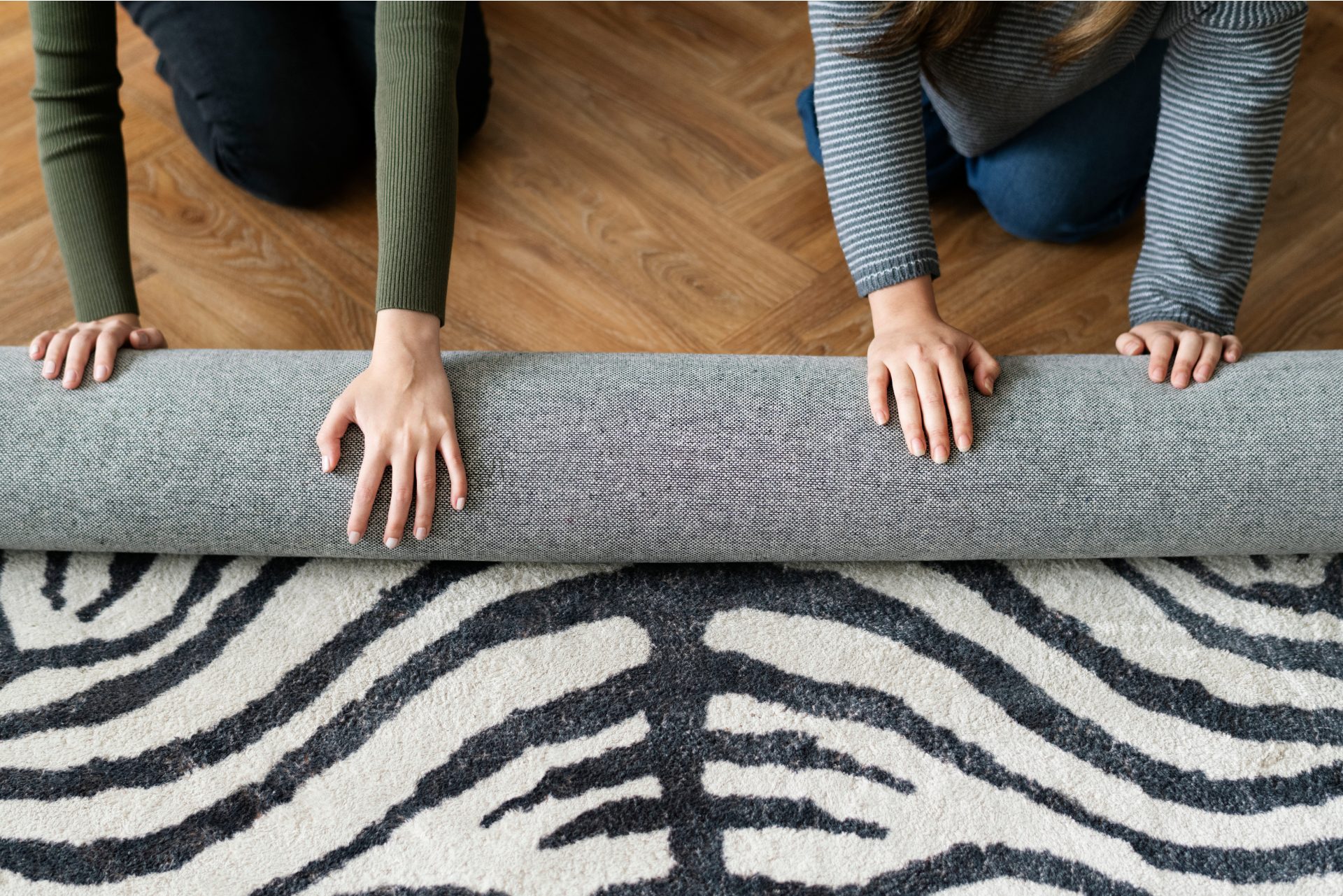
4. Laying & Stretching: The carpet is unrolled and cut roughly to size. A power stretcher or knee kicker is then used to stretch the carpet taut over the gripper rods, ensuring a ripple-free, secure fit that prevents “tunnelling.”
5. Trimming & Edging: Excess carpet is carefully trimmed, and the edges are tucked neatly into the gap between the gripper rods and the skirting board.
6. Transitions:Special attention is paid to stairs, doorways, and transitions to other flooring types using appropriate threshold strips or metal trims.
Measuring for Carpets
Accurate measurements prevent costly waste. Always follow the rule: measure the maximum length and width of the room, including all recesses and doorways.
1. Add an extra 5–10% to the final measurement for trimming and pattern matching.
2. UK carpet rolls are typically manufactured in 4-metre or 5-metre widths. Always check the roll width against your room dimensions to plan for seams and minimise waste.
Current UK Carpet & Flooring Trends (2025)
The latest interior trends are moving away from sterile minimalism toward warmth, texture, and personality.
Warm Neutrals & Earthy Tones: The cool grey trend is fading. Homeowners are embracing warmer colours like taupe, soft clay, oat, sand, and muted moss green to create calming, natural, and grounded spaces.
High-Pile Plush Carpets: The demand for comfort is high, leading to a resurgence in luxurious, deep-pile Saxony and Velvet carpets that create a “cloud-like” feel underfoot.
Bold Patterns & Geometrics: Statement-making designs, including plaid, stripes, and modern geometric patterns, are becoming popular, particularly for stairs and feature rooms, often in a sophisticated monochrome or a deep navy blue.
Layered Textures: A key trend is the layering of a decorative rug on top of a wall- to-wall carpet to add extra texture, visual interest, and a maximalist, cosy aesthetic.
Sustainability & Natural Fibres: Driven by eco-conscious consumers, there is a strong focus on British wool, natural fibres (like Sisal and Jute), and carpets made from recycled synthetics and low-VOC (Volatile Organic Compound) adhesives.
| Accessory | Purpose | Key Benefit |
| Underlay/Cushioning | Layer between subfloor and carpet | Comfort, insulation, noise absorption, longevity |
| Gripper/Tack Strips | Wooden strips with sharp tacks | Anchors carpet securely |
| Seam Tape/Adhesive | Joins carpet pieces invisibly | Durable, seamless joins |
| Threshold Strips | Metal/wood strips at transitions | Bridges/protects carpet edges |
| Stair Rods | Decorative metal bars on stairs | Functional & decorative |
| Edge Binding | Fabric tape around raw edges | Prevents fraying |
FAQ’s
General / Buying
– A carpet usually covers the entire floor wall-to-wall, while a rug is smaller, movable, and decorative.
– Consider foot traffic, appearance, comfort, and how well the pile hides footprints or shading.
– Wool is natural, flame-resistant, and long-lasting; synthetics are more stain-resistant and affordable.
– 10–20+ years, depending on fibre, traffic, maintenance, and installation.
– Yes, carpet with underlay provides thermal insulation and absorbs noise.
– Usually not recommended due to moisture; opt for waterproof flooring instead.
– Typically 4 m or 5 m wide.
– Warm neutrals, earthy greens, deep blues, and bold accent colours.
– Wool and recycled synthetic carpets can be eco-friendly; check certifications.
– Yes, many modern carpets have recycling programs or take-back schemes.
– Darker colours and textured piles help, but regular cleaning is essential.
– Low-VOC carpets and adhesives are available to reduce emissions.
– Only specialised outdoor carpets are suitable; normal carpet will deteriorate.
– No, it’s seeing a resurgence with cosy, maximalist interior trends.
– Carpets add insulation, warmth, and comfort, ideal for draughty houses.
– Prices vary hugely, but for a good-quality, mid-range carpet, expect to pay from £20 to £40 per square metre, excluding underlay and installation. Premium wool and luxury synthetic options can cost upwards of £50 per square metre.
– A wool-rich blend or a high-quality, durable Nylon (Polyamide) twist pile is often recommended. Twist pile has a tighter construction that better resists crushing and wear from heavy foot traffic on stairs.
– Berber (a loop pile) is durable and hides dirt well. However, the loops can sometimes snag on pet claws, leading to runs. A cut pile or a tightly woven, low-level loop is generally safer for pets.
– The Tog rating measures thermal resistance. A higher Tog rating means better insulation. If you have underfloor heating, ensure your carpet and underlay combination has a Tog rating of less than to allow the heat to pass through effectively.
– Both are types of high-quality woven carpets, often made from wool. Axminster looms can weave intricate, complex
patterns and use many colours, while Wilton is typically limited to fewer colours and produces plainer or small, repeating pattern designs.
Measuring & Installation
– Yes — they ensure proper tension, alignment, and secure fitting.
– In low-visibility areas, aligned with walls or furniture.
– 5–10% extra for trimming and pattern alignment.
– Power stretcher, knee kicker, seam iron, knives, trimmers, grippers.
– A few hours per room, depending on size and complexity.
– Yes, unless adhesives require curing.
– Options: wrap risers, use stair rods, or custom-cut stair treads.
– A strip with nails that holds carpet edges in place.
– Poor stretch, uneven subfloor, or incorrect trimming.
– Use transition strips to bridge carpet and other floors.
– With the light reduces visibility of seams.
– Seams are required; careful positioning minimises visibility.
– Carpet is trimmed and tucked neatly under thresholds.
– Often yes, to avoid awkward cuts or folds.
– Usually not recommended; it can cause uneven surfaces.
– Seams are unavoidable if the room is wider than the carpet roll ( or ). Professional fitters will try to place seams in low visibility areas (e.g., under furniture), run them with the direction of natural light, and use a high-quality seam tape for a clean join.
– Both are tools used to stretch the carpet. A knee kicker is for initial positioning and small stretches, while a power stretcher uses leverage to apply far greater, uniform tension across the entire room, which is crucial for preventing ripples and prolonging the carpet’s life.
– No, it’s highly recommended to replace the underlay every time you replace the carpet. A worn or compressed underlay will reduce comfort, offer poor insulation, and lead to premature wear of your new carpet.
Maintenance & Cleaning
– High-traffic: daily or several times a week; low-traffic: weekly.
– Yes, with proper equipment and care.
– Treat quickly using recommended cleaners and test first.
– Some fibres fade; use curtains or UV-filtering windows.
– Use enzyme cleaners, bicarbonate, or professional cleaning.
– Every 12–18 months or for tough stains.
– Yes, hot water extraction is common, but avoid over-wetting.
– Avoid moisture; dry thoroughly after cleaning.
– Rotate furniture, groom pile, vacuum along grain.
– Usually no, unless specifically designed for layering.
– It’s best to have carpets professionally cleaned every 12–18 months to
– Act immediately! First, scrape up any solids. Then, blot the liquid using a clean, white cloth, working from the outside of the stain inwards. Never rub a stain, as this can damage the pile and spread the mess. Use a suitable carpet stain remover, following the product instructions carefully.
– Shading is when the carpet pile appears lighter or darker in areas due to the pile bending and reflecting light differently. It is common in plush Saxony and Velvet cut-pile carpets and is considered an inherent characteristic, not a manufacturing defect.
– The industry is moving toward greater sustainability. In recent years, over 80% of UK carpet waste has been diverted from landfill, though a significant portion is still used for Energy-from-Waste (EfW) applications. True closed-loop recycling (back into new carpet) is growing but still represents a smaller percentage. Always ask your supplier about their end-of-life take-back schemes.
Accessories & Add-ons
– Yes, it improves comfort and extends carpet life.
– Dense, resilient types for living rooms; firmer for furniture-heavy rooms.
– Decorative but also help hold stair edges.
– Creates invisible joins faster than sewing.
– Prevents fraying on custom rugs and cut pieces.
– Prevents moisture rising from subfloor.
– Yes, low-VOC and formaldehyde-free types.
– Yes, as long as transitions are neat and styles coordinate.
– Yes, check thermal resistance of carpet and underlay.
– Fibre, stain, and installation warranties vary; always register products.
Why Choose Flooring Factory Outlet Croydon
For top-quality carpets, vinyl flooring, and SPC wall panels at unbeatable prices:
1. Wide selection of styles and materials
2. Expert measuring and professional installation
3. Sustainable and durable products
Visit Us:
Address: 66 Purley Way, Croydon CR0 3JP
Phone: 020 3004 6630
Email: sales@flooringfactoryoutlet.co.uk