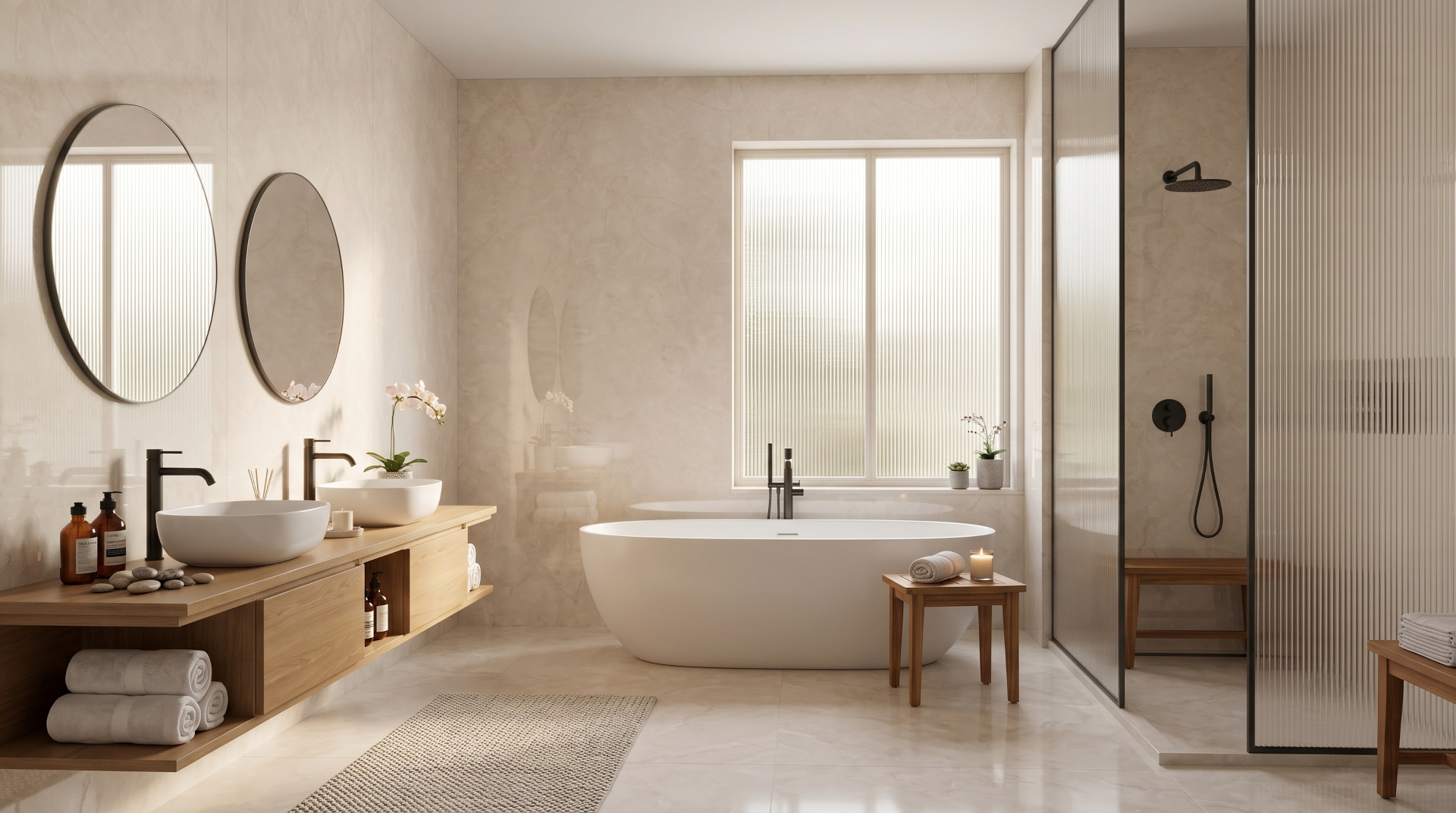
The human fascination with marble spans millennia. From the majestic pillars of the Parthenon in Athens to the breathtaking geometry of the Taj Mahal, this extraordinary metamorphic rock has consistently stood as the ultimate symbol of wealth, power, and architectural sophistication. In contemporary interior design, the desire for that unmistakable, fluid veining remains as strong as ever. However, the ways in which we introduce this classical aesthetic into our homes have evolved.
Today, homeowners and contractors are no longer limited to heavy, temperamental stone slabs that require specialist structural reinforcement. Instead, modern engineering allows retail hubs like the Flooring Factory Outlet to offer advanced, high-tech alternatives, such as Pro-Tek high gloss marble wall panels. These innovative Stone Plastic Composite (SPC) systems capture the deep, light-reflective beauty of real polished stone while eliminating the immense weight, cost, and maintenance headaches traditionally associated with quarried rock.
Understanding the true value of these modern alternatives requires looking back at the remarkable geological journey of natural marble. Exploring how it forms, how it is extracted from the earth, and how it is processed reveals why it remains so revered, and why high-fidelity alternatives have become a revelation for modern property renovations.
Jump to section
- A Geological Masterpiece: The History and Formation of Marble
- Classic Geographies: The Different Names of Marble
- The Earth and the Edge: How Natural Marble is Mined
- From Bedrock to Building: The Manufacturing Process
- The Modern Alternative: High Gloss Wall Panels at Flooring Factory Outlet
- 10 Reasons to Choose Pro-Tek High Gloss Marble Panels Over Real Stone
A Geological Masterpiece: The History and Formation of Marble
Long before marble becomes a polished bathroom feature or a grand hallway floor, it begins life as a completely different material. True marble is a metamorphic rock that originates as sedimentary limestone or dolomite rock, rich in calcium carbonate. Over millions of years, tectonic plate movements subject these deeply buried sedimentary layers to unimaginable heat and pressure within the Earth’s crust.
This intense thermal process causes the original rock to recrystallise, forming an interlocking mosaic of calcite or dolomite crystals. The distinctive, sweeping lines, webs, and clouds that we call veining are actually geological impurities. Mineral deposits such as clay, silt, sand, iron oxides, or chert, which were trapped in the original limestone layers, are heated, stretched, and mobilised during metamorphism. The result is a highly individualistic tapestry of colour etched permanently into the stone.
The word marble itself derives from the ancient Greek term marmaros, which translates to “shining stone”. This name reflects the unique way the rock interacts with light. Because the crystalline structure of pure white marble is somewhat translucent, light does not simply bounce off the surface. Instead, it penetrates a few millimetres into the stone before scattering, creating a soft, ethereal luminescence that mimic the texture of human skin. It was this specific optical quality that made it the preferred medium for classical sculptors like Michelangelo and Bernini.
Classic Geographies: The Different Names of Marble
Throughout history, distinct varieties of marble have been identified, named, and traded based on the specific geographic regions where they are quarried. Each location yields a unique combination of base colour and mineral veining, creating a diverse catalog of natural stones that are instantly recognisable to architects and designers worldwide.
- Carrara Marble: Hailing from the Apuan Alps in northern Italy, Carrara is arguably the most famous variety in the world. It features a soft, greyish-white background dressed with fine, feathery grey veins. It has been used since the days of ancient Rome for monuments and statues.
- Calacatta Marble: Also quarried in the Carrara region, Calacatta is much rarer and considered a premier luxury stone. Unlike Carrara, it boasts a crisp, bright white background contrasted by bold, dramatic, and much thicker veining that ranges in colour from dark grey to warm gold.
- Statuario Marble: The ultimate sculptural stone, Statuario features a highly reflective, bright white base with heavy, dark grey veins crossing the surface in distinct patterns. Its limited availability makes it exceptionally exclusive.
- Nero Marquina: Moving away from classic whites, this striking black stone is extracted from the Basque Country in northern Spain. It is celebrated for its deep, intense black background which is split by sharp, lightning-like white calcite veins.
- Emperador Marble: Sourced from various quarries across Spain, this stone is known for its warm, rich brown tones. It displays heavy, chaotic veining in shades of cream and white, making it a popular choice for traditional, opulent interior schemes.
- Crema Marfil: Another Spanish classic, Crema Marfil offers a pale, creamy beige background with uniform texture and subtle, understated veins, valued for its ability to bring warmth to large architectural spaces.
- Verde Guatemala: This intense, deep green stone mimics the lush density of a rainforest. It features dramatic dark green and white veining, making it a highly sought-after material for luxury accent features.
The Earth and the Edge: How Natural Marble is Mined
Extracting a block of natural marble from a mountain is a monumental feat of engineering that requires precision, massive machinery, and a deep respect for the stone’s natural fracture lines. Historically, ancient miners used wooden wedges soaked in water, which would swell and crack the stone along pre-drilled holes. Today, the process is heavily mechanised to ensure maximum yield and minimal waste.
The mining process begins at an open-cast quarry face. Engineers first use advanced geological mapping to identify the quality and direction of the stone layers. Once a section is selected, specialised diamond wire saws are deployed. These machines utilize a continuous loop of heavy steel cable threaded with industrial diamond beads. The wire is fed through pre-drilled vertical and horizontal holes, slicing smoothly through the solid bedrock like a hot wire through wax.
In some operations, massive chain saws or high-pressure water jet cutting systems are used alongside diamond wire to isolate giant blocks of stone, often weighing between 15 and 30 tonnes. Once separated from the quarry wall, these colossal blocks are carefully tipped onto beddings of loose soil or sand to prevent them from fracturing upon impact. Heavy-duty excavators and gantry cranes then load the blocks onto specialized transport trucks, which haul them to processing facilities.
From Bedrock to Building: The Manufacturing Process
Once the raw marble blocks arrive at the manufacturing facility, they undergo a rigorous conversion process to transform them into flat, calibrated products suitable for walls and floors.
The first step in the manufacturing facility is primary cutting. The massive blocks are placed into a gang saw, which features a series of parallel, vibrating steel blades. As the blades press down, a slurry of water and abrasive grit is poured over the stone. This machine slices the entire block simultaneously, turning it into uniform slabs like a loaf of sliced bread. For flooring tiles, the slabs are cut thinner, typically around 10mm to 15mm, while wall cladding or worktop slabs are cut thicker, usually 20mm to 30mm.
After cutting, the slabs pass through an automated polishing line. Here, the stone travels under a sequence of rotating grinding heads. Each head uses progressively finer abrasives, moving from coarse diamond grits that flatten the surface to ultra-fine polishing compounds that bring out the stone’s natural glass-like shine. For flooring tiles, the slabs are routed to cross-cut saws that slice them into standard dimensions, such as 600mm x 600mm, before their edges are bevelled or rectified for a perfect square finish.
The Modern Alternative: High Gloss Wall Panels at Flooring Factory Outlet
While the history and craftsmanship of natural stone are undeniably romantic, the practical reality of installing and maintaining solid slabs can be a daunting prospect for modern homeowners. This challenge is exactly why engineered wall coverings have taken the interior design market by storm.
Retail outlets like the Flooring Factory Outlet have dedicated significant showroom space to advanced alternatives, specifically showcasing the Pro-Tek high gloss marble wall panels. These systems are manufactured using Stone Plastic Composite (SPC) technology. Instead of using solid quarried stone, these panels combine a rigid, dense core made of limestone powder and stabilizers with an incredibly high-definition photographic print layer. This image layer replicates the exact veining, depth, and character of premium stones like Calacatta, Carrara, or Nero Marquina.
The panel is finished with a durable, UV-curable high gloss topcoat that gives it the radiant, light-reflective sheen of polished stone. Standing at heights up to 2800mm, these high gloss wall panels allow for full, floor-to-ceiling coverage without any horizontal joints, creating a seamless, ultra-modern look that is completely waterproof, exceptionally durable, and remarkably easy to handle.
10 Reasons to Choose Pro-Tek High Gloss Marble Panels Over Real Stone
When planning a home renovation, choosing between real marble slabs and Pro-Tek high gloss marble wall panels often comes down to balancing aesthetics with everyday practicality. Here are ten distinct advantages that make engineered SPC panels the superior choice for modern properties:
- Complete Waterproof Performance: Unlike natural stone, which is porous and can absorb moisture, Pro-Tek SPC panels are 100% waterproof, making them ideal for high-humidity wet rooms and shower enclosures.
- Grout-Free, Hygienic Finish: These panels utilize an interlocking tongue-and-groove system that slots neatly together without grout lines, eliminating the porous channels where mould, mildew, and bacteria thrive.
- Rapid, DIY-Friendly Installation: Real stone requires a highly skilled stonemason and specialized wet-cutting tools. Pro-Tek panels are lightweight, easy to trim with standard tools, and adhere directly to existing walls with a suitable adhesive.
- Zero Maintenance and Sealing Required: Natural stone must be sealed with specialist chemical treatments upon installation and re-sealed annually to prevent staining. High gloss SPC panels never require sealing and simply wipe clean.
- Exceptional Stain and Chemical Resistance: Real stone is highly sensitive to acids, meaning everyday household items like lemon juice, vinegar, perfumes, or harsh bathroom cleaners can permanently etch or dull the surface. Pro-Tek’s protective topcoat is completely impervious to these substances.
- Significant Weight Reduction: A solid stone wall slab can weigh hundreds of kilograms, requiring structural wall reinforcement. Pro-Tek panels offer a slim, lightweight profile that puts zero structural stress on interior walls.
- Perfect Visual Consistency: Natural quarry blocks are unpredictable, meaning your installed tiles may look wildly different from the showroom sample. Engineered panels offer controlled, continuous veining designs for a cohesive appearance.
- Warm to the Touch: Stone is inherently cold and pulls ambient heat out of a room. The composite construction of SPC wall panels offers vastly superior thermal insulation, keeping your bathroom feeling warmer and more comfortable.
- Excellent Impact Resistance: While stone is hard, it is also brittle and prone to chipping or cracking if knocked by a heavy object. The rigid composite core of Pro-Tek panels provides excellent shock absorption against everyday bumps.
- Outstanding Cost Efficiency: From the initial material purchase to the specialist transport and labor-intensive installation costs, real stone is an expensive investment. SPC panels deliver the identical, ultra-luxurious high-gloss look at a fraction of the total project expenditure.
By blending the deep historical grandeur of classical design with the absolute best of 21st-century manufacturing technology, high gloss wall panels have truly redefined what is possible in modern home design. They offer a flawless compromise, allowing you to enjoy the aesthetic legacy of the world’s finest quarries without any of the architectural or maintenance burdens.